
Dan Siegel Flipping your lid: Hand Brain Model
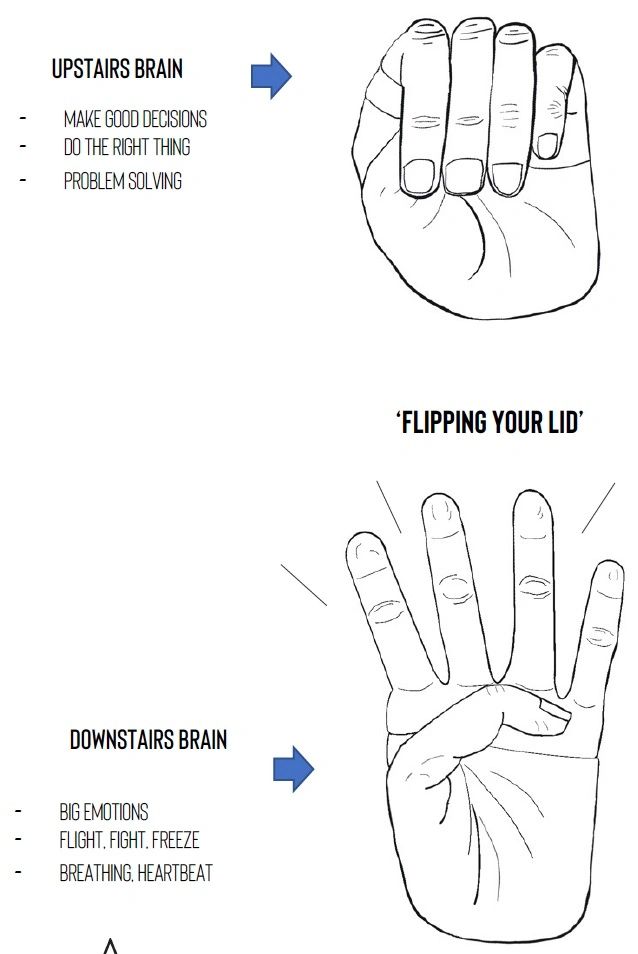
Daniel Siegel & Tina Bryson famously use the term ‘upstairs and downstairs brain’ to explain what happens to the brain during a tantrum. To demonstrate the hand brain model flipping your lid, they use a closed fist image to show a calm, working, integrated brain. The fingers over your fist represent your upstairs; including cerebral cortex responsible for higher order thinking – decision making, problem solving, planning. The inside of the palm and the thumb represent your downstairs brain; including the brain stem, limbic region and the amygdala -responsible for breathing, heart beating, flight, fight or freeze, and strong emotions – anger and fear. If the downstairs brain senses danger, it overrides the upstairs brain from thinking. This is great if you are getting attacked by a bear, less great if your kiddo thinks their lunch is served on the wrong colour plate! So that is when the tantrum starts!
So why teach children about the brain? The upstairs brain in children doesn’t always work (remember, it’s not yet fully developed!) so they can’t necessarily control their behavior, emotions, make good decisions. Our job as adults is to help children to integrate these two levels:
– ‘upstairs and downstairs’ (similar, and in addition to, the ‘left and right’ side of the brain). We want the child to learn to use their upstairs (calmer, decision making) brain when emotions are high. Integration occurs when the child can stay calm with strong emotions
– breathing and mindfulness helps make this happen.
Dan Siegel flipping your lid allows your child to learn what happens in the brain, and allows for a non-verbal cue of what is happening.