
Attachment Styles
Attachment Styles: What are they and how do they help us understand ourselves?
Attachment styles describe how individuals form and maintain relationships. Research suggests that the way we form emotional attachments to our caregivers (and important people in our childhood) will shape how we see relationships and respond to people around us throughout the rest of our life.
In other words, we learn very early in life whether people who are important to us can be depended on to make us feel safe, seen, soothed, and secure. How those needs are met can shape our expectations of future relationships and whether we trust the relationships in our life.
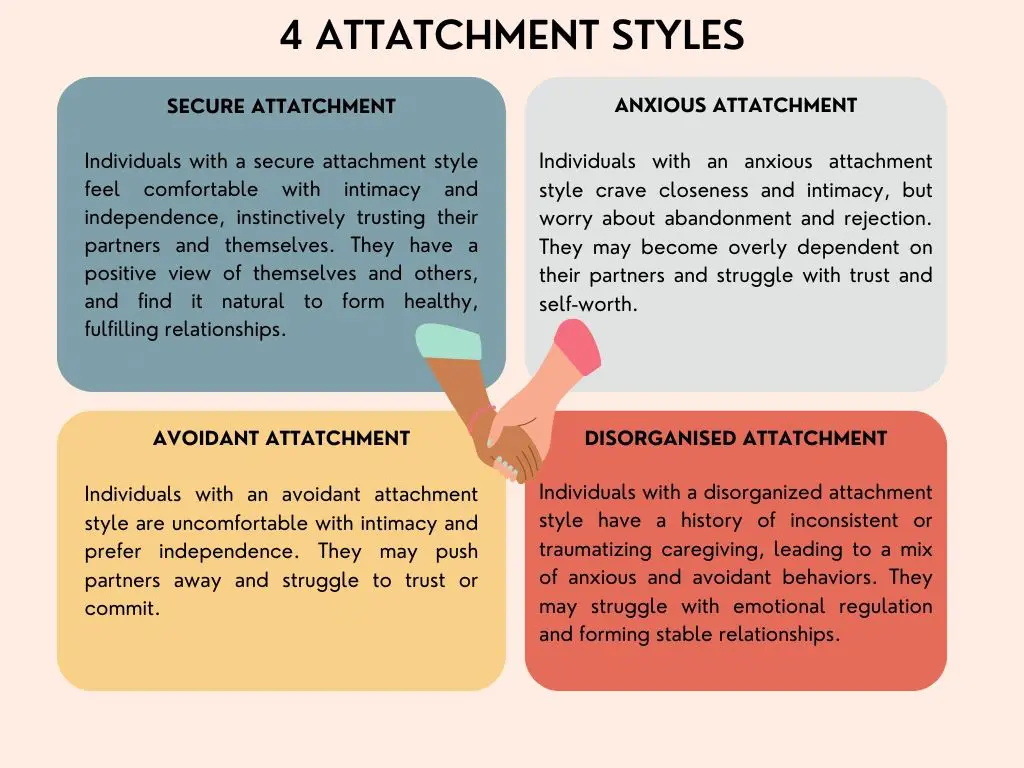
There are four different attachment styles:
- Secure Attachment:
Individuals with a secure attachment style feel comfortable with intimacy and independence, instinctively trusting their partners and themselves. They have a positive view of themselves and others, and find it natural to form healthy, fulfilling relationships.
- Anxious Attachment:
Individuals with an anxious attachment style crave closeness and intimacy, but worry about abandonment and rejection. They may become overly dependent on their partners and struggle with trust and self-worth.
- Avoidant Attachment:
Individuals with an avoidant attachment style are uncomfortable with intimacy and prefer independence. They may push partners away and struggle to trust or commit.
- Disorganized Attachment:
Individuals with a disorganized attachment style have a history of inconsistent or traumatizing caregiving, leading to a mix of anxious and avoidant behaviors. They may struggle with emotional regulation and forming stable relationships.

Attachment styles can help us understand our pattern of how we interact with important people in our life. Attachment styles can be sneaky – we may not know that the way we respond to people has a lot to do with our own history and expectations. When we become aware of our patterns, it can help us understand how our needs can be met in relationships.
Attachment-centered therapy (ACT) focuses on how our attachment styles affect our current relationships. It can be especially helpful to identify needs a relationship should meet for you, understand your patterns in relationships, learn to develop trust with yourself and others, and improve your ability to communicate with the people who are important to you. Our attachment styles are learned – meaning that with the right support we can shift our perspectives and behaviors to invest in healthy, committed relationships with friends, family, and partners. attachment styles.
Thanks for reading! Did you know we have therapists available as soon as next week?
Click here to book a FREE 15 minute consultation with us today.
Not ready to book?
Send us an email with any questions, and we’d be happy to get back to you.
Click here and scroll down to “Contact Us” to send us an email.
#therapistsnearme #southcalgarytherapists #ADHDassessments #autismassessments #childpsychologistsnearme #childpsychologistscalgary
